

ABOUT THE AUTOMOTIVE MARKET

Although composite materials compete for market share with more conventional materials like steel and aluminum, their use is increasing globally. The global composite market is projected to reach $130.8 billion by 2024, exhibiting an annual growth rate of 7.8 percent.
Almost 4.5 billion pounds of composite materials are sold annually for use in automotive applications. The vast majority of this volume consists of thermoplastic composites, which generally have lower material and processing costs compared to thermoset materials. Factors driving the consumption of composites in the automotive sector include, simply put, their potential to replace materials like steel and aluminum in vehicle production and their entry into various applications.
Currently, the amount of material consumed in composite applications in vehicles in production is proportional to the number of vehicles produced. Global vehicle production is expected to exhibit only limited growth in 2019 and in the near future, with annual growth rates hovering around 2 percent. The largest portion of unit-based production growth is expected to occur in China and Southeast Asian countries, while figures in established markets such as the United States and Western Europe are projected to remain relatively flat. Therefore, to achieve a significant increase in volume, composite materials will need to find their place in applications currently using steel and aluminum.
In mass-produced automobiles, there is fierce competition in the application field, and materials are evaluated based on the value they add in terms of performance and weight compared to their cost. Considering that one of the main reasons for choosing composite materials is weight reduction, the importance OEMs place on weight reduction will play a key role in the future adoption of composite materials. Fuel economy standards introduced in relevant regions and the adoption of electric powertrains are also among the factors that will shape the future of composites in the automotive market.
Fuel economy standards and emission limits are among the main reasons driving the use of lightweight materials in new vehicles in recent years. Lighter vehicles require less energy for braking and starting, which improves fuel economy. As a result of standards expected to be implemented by 2021, which foresee higher fuel economy, the use of aluminum and reinforced steel in lightweight vehicles has increased significantly, while the use and interest in GFRP and CFRP have also entered a rapid growth trend.
Strict measures in the areas of fuel economy and emissions during the 2020-2022 period
Regulations will continue to increase the demand for lightweight materials (Figure 1). Europe is the established center of the automotive composites world due to government and consumer incentives for small, light and efficient vehicles.
While the United States and Canada are exceptional countries that have already formulated regulations for beyond 2022, the US is considering easing these regulations somewhat after 2021. Less stringent regulations in the area of fuel economy could remove a factor encouraging the adoption of lightweight composite materials in North America, potentially shifting leadership in composite technology and material use to other regions.
Figure 3: Vehicle fuel economy standards implemented from the past to the present.
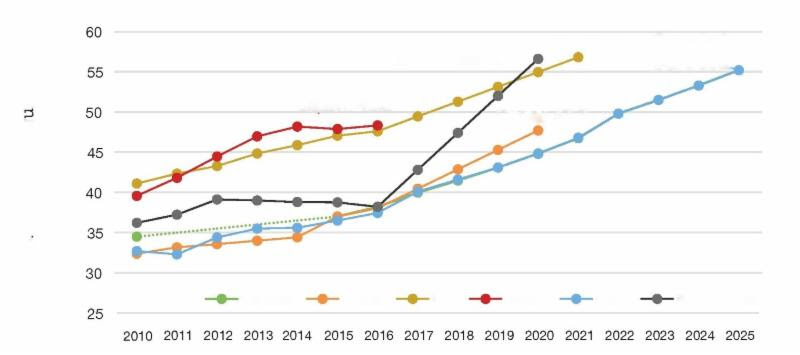
The emergence of new technologies in automobiles is also among the factors that will shape the demand for composite materials in the sector in the future.
The impact of electric powertrains and self-driving vehicles on materials used in the automotive industry is still a subject of debate. Electric vehicles have large batteries that need to be securely encased to protect them from environmental factors and various road elements. Self-driving vehicles, on the other hand, will change the nature of human interaction with vehicles and create new demands and needs within the vehicle environment. The timing and magnitude of these technological changes will also play a decisive role in determining whether they represent attractive opportunities for composite materials in the short and long term.
There are significant opportunities to grow the market share of composite materials in the automotive industry. In the short term, the need for lighter vehicles to meet regulatory requirements will open the door to new applications of composites. Although the relaxation of fuel economy standards in the United States may slow the use of composite materials in the short term, the widespread adoption of electric powertrains and self-driving vehicles will bring new opportunities for these materials. Uncertainties regarding the timing and extent of this opportunity are causing concern for OEMs and material suppliers.
Note: This article has been translated from the January-February 2019 issue of Composites Manufacturing Magazine.