
TUSAŞ Initiates International Cooperation for Additive Manufacturing
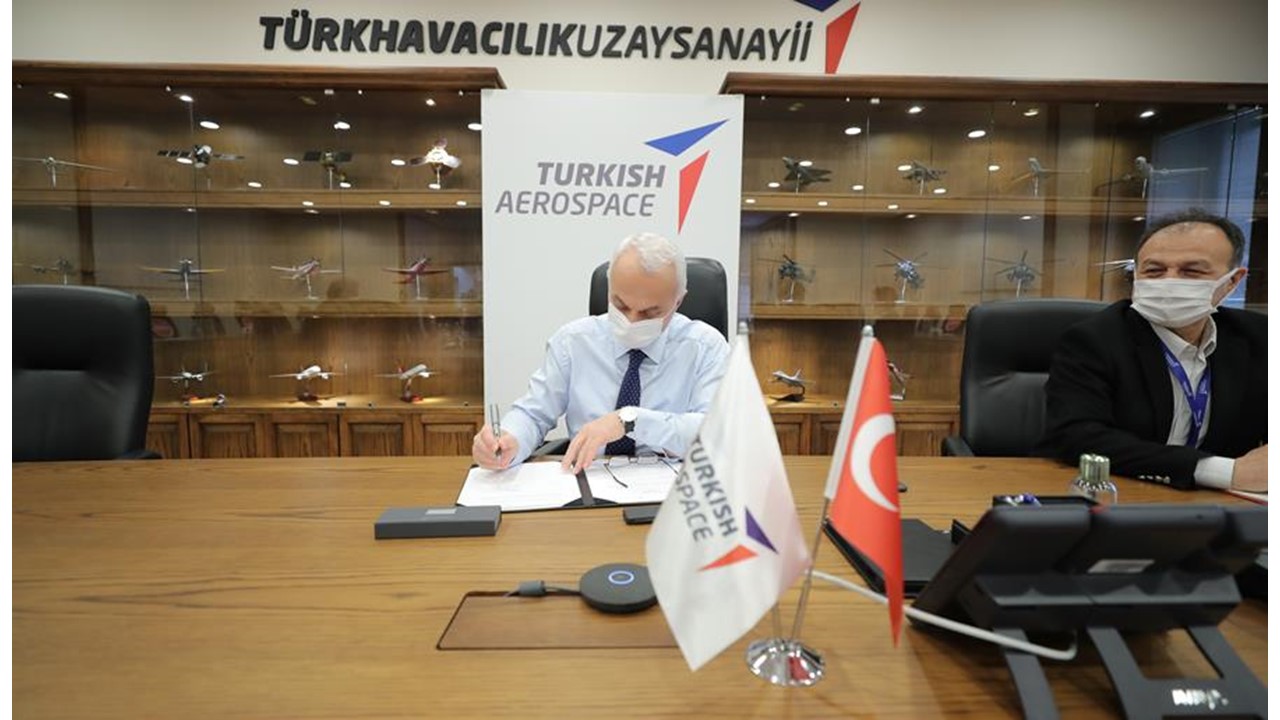
Turkish Aerospace Industries (TUSAŞ) continues its investments in additive manufacturing, based on 3D printing, which will be used in many production-requiring sectors, primarily aviation, in the near future. Within this scope, it has signed a cooperation agreement with "FIT AG," one of the world's leading additive manufacturing manufacturers. The aim of this agreement is to develop global-scale projects that will contribute to the aviation ecosystem through joint research and development in additive manufacturing.
In the context of today's rapidly developing aviation and space technologies, TUSAŞ, which is rapidly continuing its R&D studies, is signing new collaborations to develop the additive manufacturing-based production methods it first announced in recent months. The cooperation agreement between FIT AG and TUSAŞ aims to develop additive manufacturing methods in the aviation sector on a global scale and to develop different joint productions related to design and manufacturing. This collaboration, which aims to increase production capabilities specifically in additive manufacturing, will also pave the way for mutual knowledge transfer. Furthermore, the agreement will provide a significant strategic advantage in obtaining parts that cannot be sourced from abroad, are discontinued, are difficult to find, or have long lead times.
The cooperation agreement will involve a detailed assessment of collaboration in additive manufacturing design, production, and mass production processes, and joint action in the development of innovative platforms. In addition, jointly developed processes, technologies, and manufacturing processes will be integrated into TUSAŞ projects, paving the way for the rapid implementation of high value-added and high-technology products. Additive manufacturing, considered a transformation that can significantly impact cost and quality cycles, is planned to provide advantages in production. Initially, the National Combat Aircraft, Satellite, UAV, and Hürjet projects will be targeted, and subsequently, qualified component production processes will be implemented for other TUSAŞ aviation platforms.
Additive manufacturing, a method that allows the production of three-dimensional parts for aircraft structural components by layering suitable powders or thin wires on top of each other and subjecting them to heat treatment using a 3D printer, enables the production of parts with complex geometries, such as multi-axial or internally channeled parts, which are not possible with traditional manufacturing methods.